Tuesday, May 20, 2008

Monopod to the rescue

I recently purchased a new lens, the Tamron 70-200 f/2.8. I will post a review later after I am finished learning the ins and outs. One thing I am becoming very aware of, however, is the need for fast shutter speeds when zoomed out to 200mm. General rule of thumb for a crop sensor camera is to multiply the focal length times 1.6 for the minimum shutter speed to get a sharp photograph (e.g., 200mm x 1.6 = minimum shutter of 1/320). This is for shooting hand held and varies greatly by how stable an individual photographer is. Some can shoot much slower and still get great shots. Others are very unsteady and need to add to this. I find I can usually go somewhat slower, but not by much, and the results will be unpredictable.

I find my new Tamron 70-200 f/2.8 is very unforgiving in this area, probably because it is a much larger and heavier lens than any of my other lenses. If anything, I need to add to the shutter speed, so I try to keep it at 1/320 or faster when zoomed out to 200mm.

Several nights ago we had a racoon on our back porch, and I was able to get several photographs before he moved on. I got very poor results, which I traced back to a shutter speed that was too slow. Last night, there was a cat lounging on my back porch. Low light shooting is one of the main reasons I purchased this lens, so this seemed like an excellent opportunity to test my new lens and see if I could improve on the dismal results I got from photographing the racoon. I have a fairly bright floodlight, so I was anticipating some good shots. Unfortunately, even with the ISO at 1600 and the aperture set to f/2.8, I needed a shutter speed of 1/10 to get a properly exposed photograph. Obviously there is a HUGE difference between 1/10 and the 1/320 I need for a sharp photograph.

Now, most of the time, wild critters don't linger on my deck long. For a static object I would not hesitate to grab the tripod and set it up, but I did not think I would have that much time. In desperation I grabbed my monopod and snapped it on the bottom of my camera. My setup is nothing fancy. I have a Dynex monopod purchased at Bestbuy and I am using a Induro SA12 ballhead mount on top. I have not been using a monopod for very long, so I needed the practice with it anyway. I was fairly satisfied with the results.
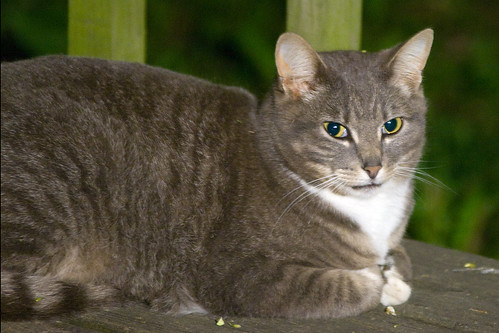

The results are still a little soft and at ISO1600 there is going to be some noise, but this is the difference between getting a shot or not. The camera and lens were already at their limits for the available lighting. Using a flash would have scared the cat away. I was also shooting through glass, which makes using the flash impractical because of the inevitable reflection. My only other choice was a tripod (which I would have done if the shot was REALLY important). A monopod is much more convenient to carry around and allows the photographer much more freedom to move as necessary. I would guess that with practice I can gain at least two stops of light with a monopod, reducing my need for 1/320 shutter speed to 1/80, or allowing me to increase my aperture from f/2.8 to f/5.6. These are very significant gains and afford the photographer many more opportunities to "get the shot" in challenging lighting conditions.

If you often find yourself in challenging lighting conditions, consider adding a monopod to your gear. It may be the key you need for a successful shot.

Wednesday, May 14, 2008

Portraits with the Canon 50mm f/1.8

Wow! A month since my last post? Where does time go. Fortunately, I have been busy taking lots of photographs. I am so glad the weather is getting nice again. I find so many more opportunities for photographs when I am not hiding in my house from the cold.
This last weekend the family and I were visiting a local farm that is almost like a zoo. We spent no more than 20 minutes there before lightning forced the officials to declare the park closed. We spent the next 45 minutes hiding under an open-air porch with nothing else to do, so, we took pictures! I had recently been reminded about the benefits of using shallow depth of field (DOF) to really isolate a subject, and I happened to have my Canon 50mm f/1.8 lens with me. The lighting was very interesting as it was very light outside the porch, but very dark underneath it. Combine this lighting with a shallow DOF (f/1.8) and you get something like this:


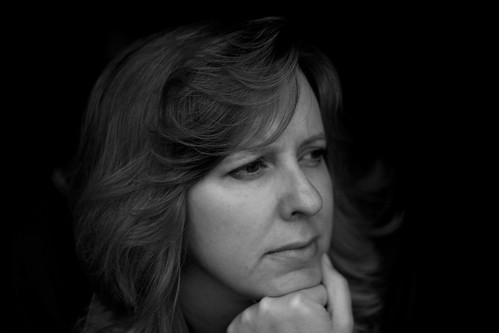
This is my oldest daughter. I had her stay under the porch with one side of her face toward the light and other toward the inside of the porch. I believe this type of lighting is also referred to as Rembrandt lighting. Either way, I really like the effect.

This is one of my lovely wife:


For this shot I had her lean on the porch railing with face to the light. I really love how all details of the porch behind her are completely lost so nothing is there to distract you from the subject.

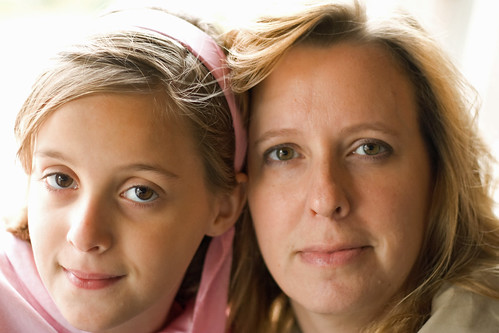
The other way to do this is to deliberately blow out the background like in this shot:


This was taken with their back to the light and I was under the porch. By properly exposing their faces, the background is almost completely blown out. However, there are still some details which keeps it from looking like they are floating, which I feel looks unnatural. The shallow DOF bit me a little bit here. My youngest daughter's face is tack sharp, but my wife, who is slightly behind the focal plane is just a tad out of focus. I applied some minor sharpening to her eyes, but they are still not as sharp as my daughter's. I still think the shot is a success, however.

Like anything else, DOF is a tool and it is not right for every type of photograph. When you really want to isolate a subject, however, it can be extremely effective.

I will try to post again very soon. I just bought a Tamron 70-200 f/2.8 and I am very eager to put it through the paces. Be watching for my report.

Chris

Wednesday, April 9, 2008

Viva Las Vegas - Days 2 and 3

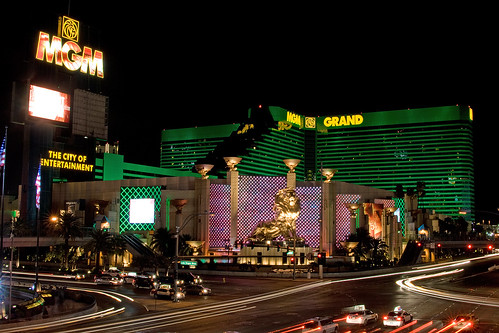
I had originally planned on a new entry each day, but each day was not interesting enough on its own. I spent about 3 hours on Monday night on the strip photographing the lights. I wanted a slow shutter to get light trails from the traffic, so I used f/22 for my aperture. The one thing I forgot is that past f/16 you start to get diffraction which leads to softer, fuzzier photographs. I did not realize this until I was post processing the photographs and they were not as sharp as I would have liked.

I used my tripod for almost all the shots, and this caused problems with the elevated ones. I was shooting from walkways and I could feel the bouncing as people walked past. During a 6-8 second exposure this vibration really shows up. In hindsight, I should have used the tripod less and depended on the vibration reduction of the lens. I might have had more noise, but the photographs would have been sharper. Even so, for my first time shooting on the strip at night, I am fairly pleased with the results.

This was shot from the 32nd floor of Mandalay Bay.


I shot these two from an overpass designed for foot traffic.


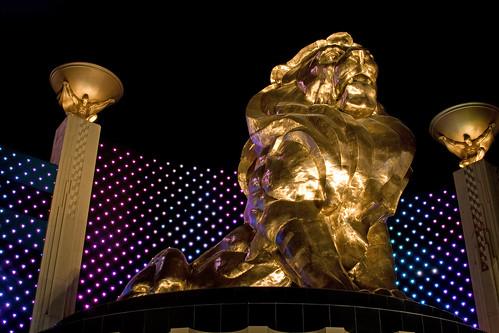
The first time I saw the MGM lion, I dismissed it. The more I walk around it and the surrounding statues, however, the more I intriguing I find it. I really like this shot of it at night.


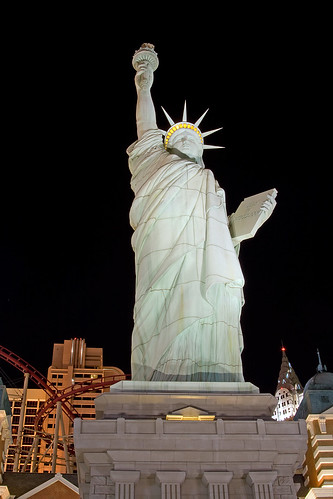
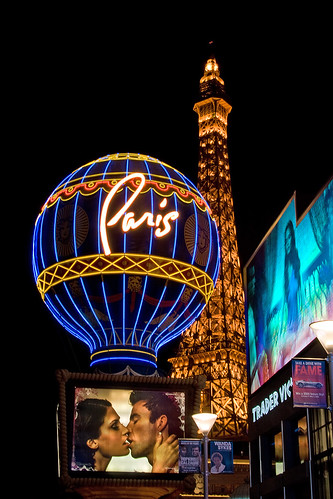
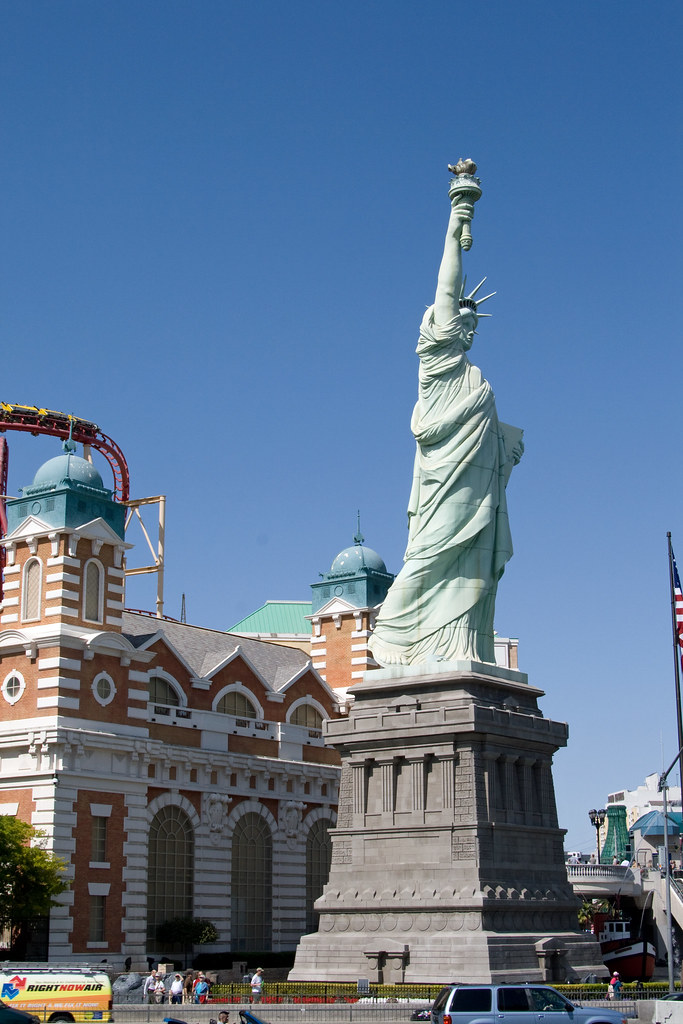
I think it is interesting that Las Vegas tries to be like other places, such as New York and Paris. It does makes for interesting photographs. I have never been to the real Statue of Liberty or the real Eiffel Tower, so it is interesting to see the representations of them in Las Vegas.


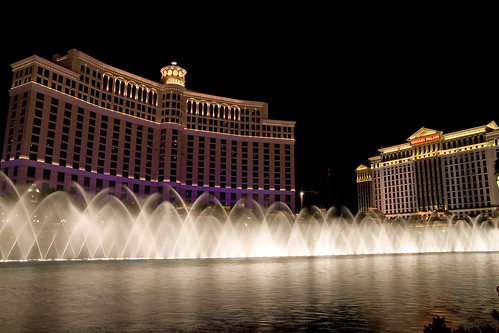
One of the most impressive sights on the strip is the water show in front of the Bellagio. I don't know how high this fountain shoots up, but it must be 50 ft. or more and it has to be thousands of feet long.

I shot this from the opposite side of the Paris balloon and I really like the composition. I met a fellow photographer at this point who was very nice. His name is John Harris who was visiting from Alaska. We had a very nice talk and shot a few photographs together. Meeting John is one of the things that makes a trip special. We forget the things we see over time, but the chance encounters we have with people can stick with us for a lifetime.


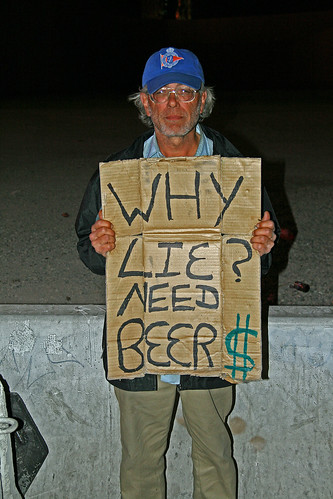
My last photograph of the evening was a gentleman panhandling for his next drink. It is an honest sign, but still a sad representation of where some people end up.

The next thing I would like to do is get off the strip and find the less glamorous side of Las Vegas (besides the homeless people panhandling on the strip). This is easier said than done, however. The strip is very strategically designed to KEEP you on the strip, at least if you are on foot. There is a freeway on one side and the other side quickly disappears into what appears to be an industrial area. The South end of the strip appears to degrade very quickly once you get past Circus Circus. With a second or third shooter I would be more eager to explore this area, but on my own that is probably not the best idea. I am going to see what I can find tonight that is safe enough to explore, but not quite as glossy as the strip itself. I may not find anything, but I have to at least try.

Sunday, April 6, 2008

Viva Las Vegas - Day 1

There are rules in blogging. If you want a reasonable sized audience you are supposed to have good content, keep each entry about the same length, and post on a consistent basis (daily, weekly, etc). So, here I am, having not posted anything of substance in over a month, and now I am going to slam you with several entries back-to-back. Oh, and this post is long also. Did I mention I was never very good with the whole rules thing?

***warning*** This entry is for adults. I doubt any children follow my blog anyway, and there is no nudity, but it does deal with the things I actually see while I am here, and some of the content is mature in nature.

I am currently "on location" in Las Vegas (on location is a fancy photographer term meaning I am actually here, as opposed to a sound stage in Hollywood). I am actually here on a business conference, but I have a fair amount of down time also, so I have lots of opportunities to shoot photographs.

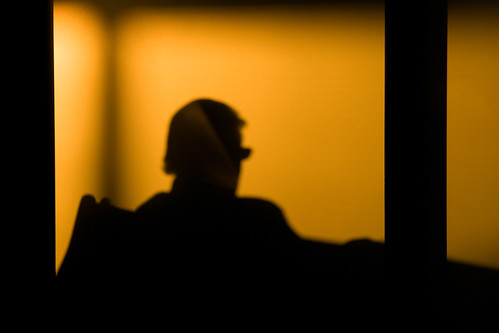
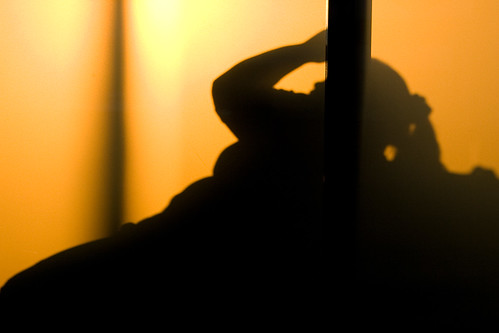
My fist day was very interesting. I got up at 5:30am so I could catch my 8:30am flight. I always arrive several hours early when flying in case I have any security problems. I never do have any security problems, so I always end up with a LOT of time to sit...and....wait. While waiting I was fortunate enough to see the sun rise. The light from the rising sun shone through the waiting room and made some very interesting silhouettes on the frosted glass where I was sitting.


Before I boarded the plane I met an interesting older man who was returning home to Montana (or Wyoming, I can't remember for sure). He had been in Kansas City taking a class to learn how to make artistic engravings on firearms and jewelry. He has actually had the opportunity to meet Tom Selleck and Sam Elliott through his contacts in the firearms industry.

On the plane from Kansas City to Salt Lake City (the longest leg of my journey) I sat next to a woman named Margi (with a hard G). She was in her mid-fifties and we had a very interesting conversation on a variety of topics including the smoking ban on the ballot in Kansas City this next week, scooters/motorcycles (we both ride), and how to teach our children to become independent thinkers. The most interesting part for me was Margi's destination and why she was going there. Margi was on her way to Hawaii on vacation. Many years ago, Margi's sister was diagnosed with terminal breast cancer. Before she died, she wanted to make a return visit to Hawaii. She finally did this, but it was very late in her illness and she ended up dying while she was there. At the time, Margi was unable to go to Hawaii and retrieve her sister, so she had to leave this to others, and she was quite upset about it. Now, many years later, Margi is headed to the spot where her sister died to honor her sister's memory.

On the plane between Salt Lake City and Las Vegas, I sat next to a gentleman who worked for SUNY (the State University of New York). His job is to manage the card readers that control all the doors, electronic equipment, and even washing machines on campus. Ok, no big deal, right? Well, there are hundreds (thousands?) of these readers and there are 15,000 people with cards spread out over five campuses. Sounds like a pretty big job to me. This is one of those jobs no one ever thinks about, but are vital to the way our world works today.

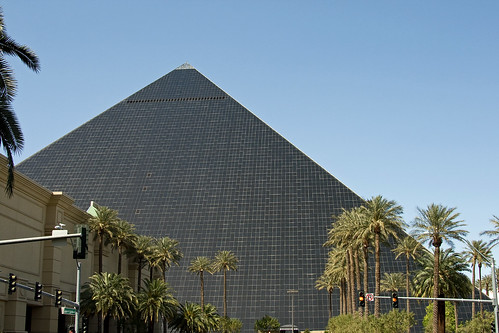
Once in Las Vegas, I checked in as fast as I could, grabbed my camera, and headed out to walk the strip. It was still early afternoon, so there were not very many lights on, but I wanted to get some photographs while everything was still fresh and new to me. I walked the entire length of the strip and had to take the bus back. I grabbed some of the traditional tourist shots first.


To me these represent the sanitized verison of Las Vegas you see on the promotional literature. I like them, but they only tell part of the story.

Within 30 minutes of walking on the strip my senses were completely overloaded and I had difficulty focusing on any thing in detail. Everything is so big and bright and loud that your attention is always being pulled in a new direction. It is so difficult to take everything in that my mind just started blocking out large chunks.

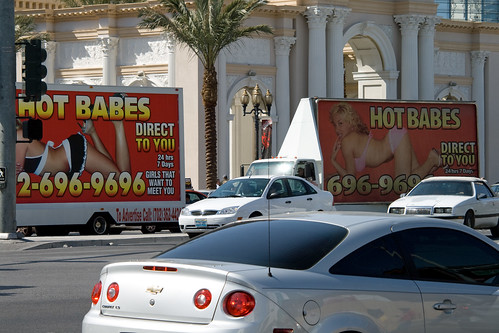
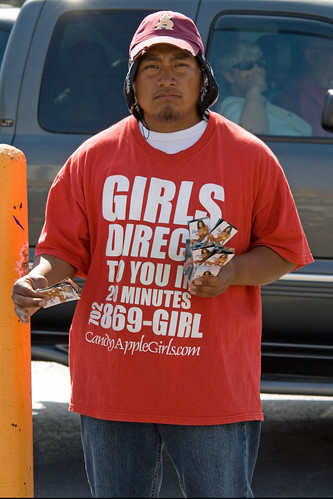
There is also a very big culture for someone coming from the midwest. The Las Vegas "anything goes" attitude is pervasive and dominates everything. In Kansas City you have an occasional billboard advertising for a strip club. In Las Vegas you have video displays the size of buildings with full motion video, billboards on trucks that drive up and down the strip non-stop, and people pushing business cards and flyers at you every 20 feet offering to deliver girls to your room.


Another thing that was very unusual to me was watching people walk around on the street with beer and mixed drinks. There in no public drinking allowed in Kansas City, so I found this surprising.

Of course, there were street performers everywhere and the only place I have not seen a slot machine (yet) is in the bathroom. At about 8pm I returned to my room completely exhausted. I closed the curtains, processed the photos from the day, and crashed hard.

Tomorrow I am going to try to get more night shots of the strip.

Sunday, March 16, 2008

In a down cycle

Hi, everyone! I just wanted to drop a note and let you know I have not disappeared. I have just been very busy with some other things and I have not had time to take very many photographs.

I am am also lacking in photographic inspiration. After four months of cold, snow, and ice, I need the view to change. Once things start to green up and outside activities start up again, I have no doubt I will be shooting more. My wife wants me to shoot some black and white shots of her and her with the girls. She has been looking at a variety of photographs and collecting ones she likes, so I think this will be a fun project.

It may be a few weeks before my next post. Talk to you soon.

Tuesday, February 26, 2008

Keep it real!

This is the age of digital photography; digital meaning electronic, bits and bytes, zeroes and ones. These images only have meaning when taken as a whole and represented to us in a way that looks like a photograph. They don’t actually become photographs until they are printed. Until then they can be easily changed, and in fact, most digital images go through some type of transformation before they are shared with anyone. Typical post processing of digital images includes adjusting the white balance so the colors look correct, sharpening to make the photograph look more crisp, and straightening to correct a horizon that is not level. None of this changes the basic nature of the image. In fact, each of these steps is taken to make the resulting photograph do a better job of representing what the photographer actually saw. We do this so the images we share will accurately communicate what we want to the viewer.

You don’t have to stop here, however. Is there a telephone pole in the photograph that is distracting? It can be removed. Remember that great shot of the bird you took last year? Maybe this photograph would look better if we copied that bird and pasted it into our new photograph. We can brighten teeth, remove wrinkles, erase stray hairs, change the color of people’s clothes, replace the background, and add or remove elements until the photograph looks exactly the way we want. Then we can print it and share it with the world. The problem is this…is it real?

You are probably asking yourself, “So what?” If you are happy with the result and other people like it, what does it matter if you made a few small changes or even several major changes? The answer to that lies in who the intended audience is, and how the photograph will be used. A very famous Chinese photographer is finding out how important that can be right now. One of Liu Weiqiang’s photographs was recognized as one of the top ten news photographs of the year. Here is a copy of that photograph.


It shows a very nice scene of antelope running near a train that is passing by. As it turns out, this image is the result of combining at least two separate photographs. The train is in one photograph and the antelope are in another, but they were never anywhere near each other. In the news world this is called fraud. You can read about the whole incident on the ZonaEuropa website and at China Daily.

You and I can make any level of changes to our photographs that we want because we are not representing them as news photographs. We are not using our photographs to tell the world, “This is what happened!”. If we are, we need to be aware of how important accurate photographs are. The AP forbids their photographers from making any significant changes to their photographs. Is there a mailbox in the foreground of that great photograph of the President? Too bad. The image must stand on its own. AP photographers even need to be careful how they crop their photographs. It is possible to change the way a photograph communicates by simply cropping out certain elements. News photographs need to be as honest as possible. They must visually tell the story. We must be able to trust them or how can we trust the articles that they support?

Unfortunately, the Chinese government used this photograph to show that the high speed train was not bothering the antelope (which is a breed on the endangered species list). The train may or may not bother the antelope. I have no idea. That is not the point. What is important is that the photograph is a lie. What you see did not really happen. This would not be a big deal if the photographer was honest about it and simply communicated the details of how this photograph was produced. In that case it becomes a piece of art and the artist can change it any way he wants. Make the antelopes purple with green dots if you want. But, never say the image is real unless it is. The photographer has resigned in shame and will have a cloud over his work for a long time, maybe even forever. His editor also lost his job.

As we progress as photographers, it is a good idea to stop and ask ourselves how our photographs are going to be used. We have some wonderful and powerful tools at our disposal, and I have seen them used to create fantastic images. We can share these with the world as long as we are honest about how we created them. When the intent of the photograph changes and is designed to document what really happened, make sure you keep that idea firmly in your mind. There is no such thing as too much honesty with news photographs. Keep the original image. Document any changes you made. That way when you share these with the world you can say, “I was there, and this is how it really happened.”

Thursday, February 21, 2008

Newest member of the family

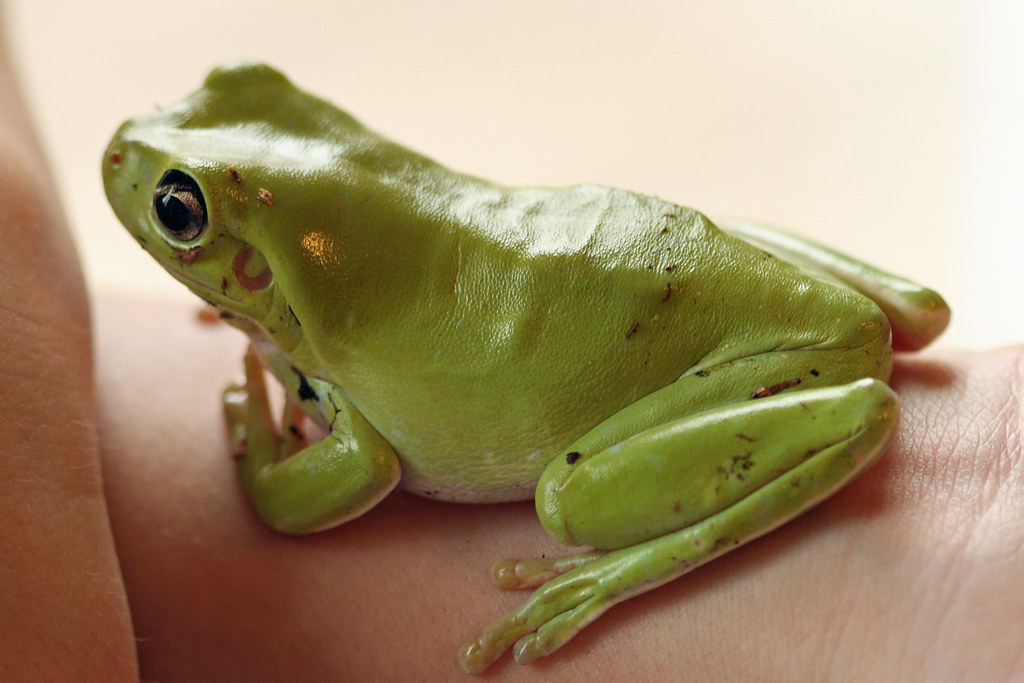
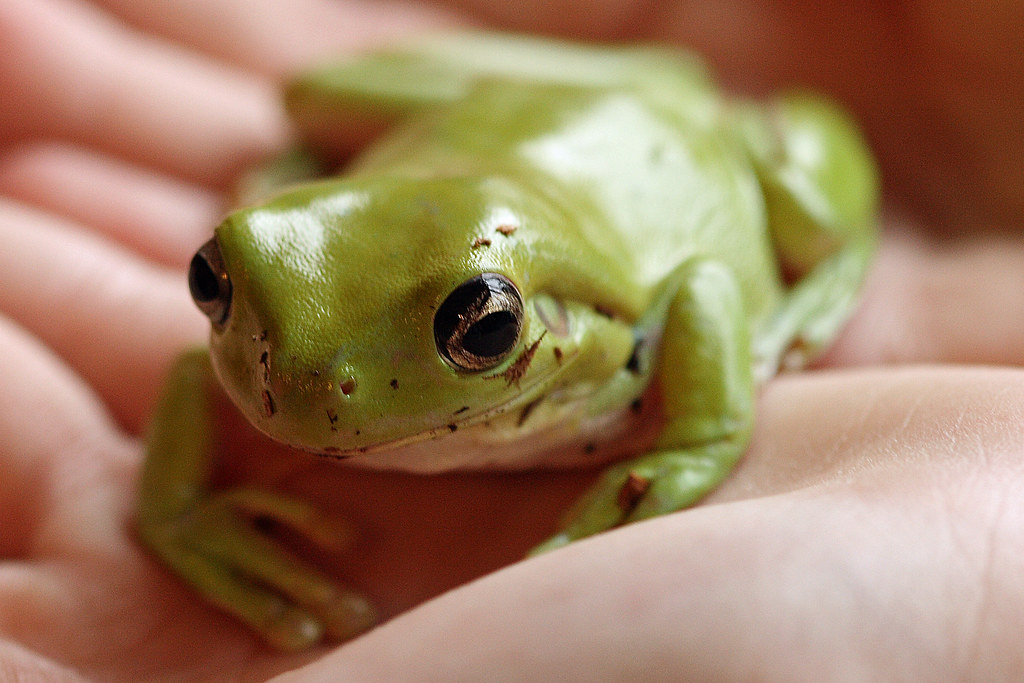
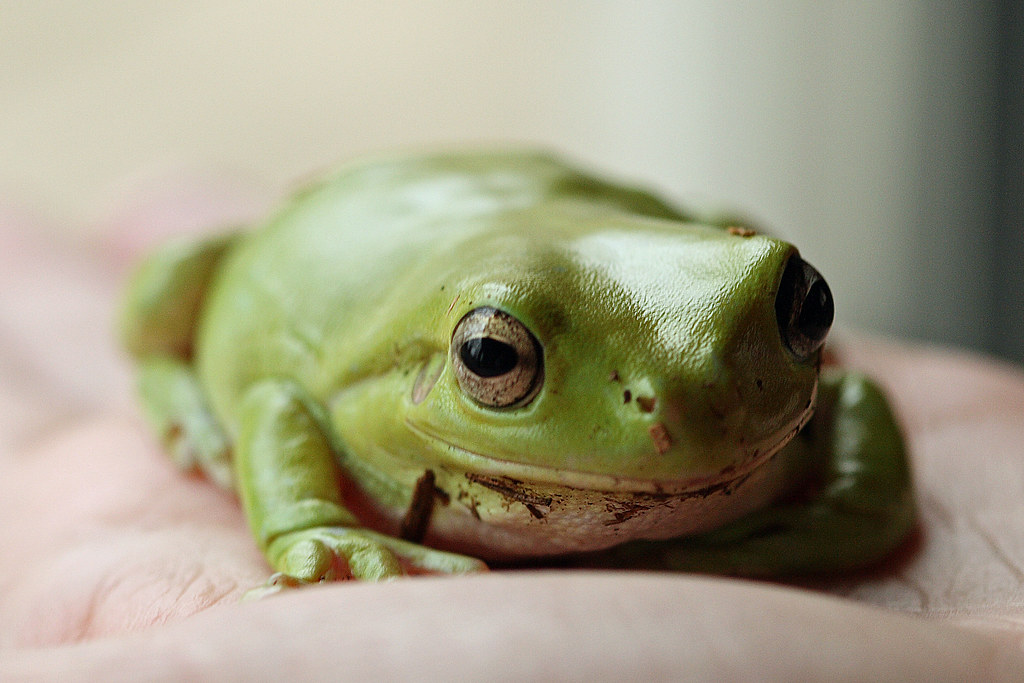
We have a new family member in my household. My oldest daughter has been saving her money and has purchased a White's tree frog which she named Saturn. Now, we have not traditionally had good luck with pets in my house. My oldest is allergic to everything with fur, so that rules out all of the conventional pets, like a cat or a dog. We have also tried a few alternative pets, with the most recent being a hedgehog, which my wife ended up being allergic to. So, I was not terribly excited about the idea of trying another pet.
So far he has been a very good and easy pet, so my fears were probably unfounded.
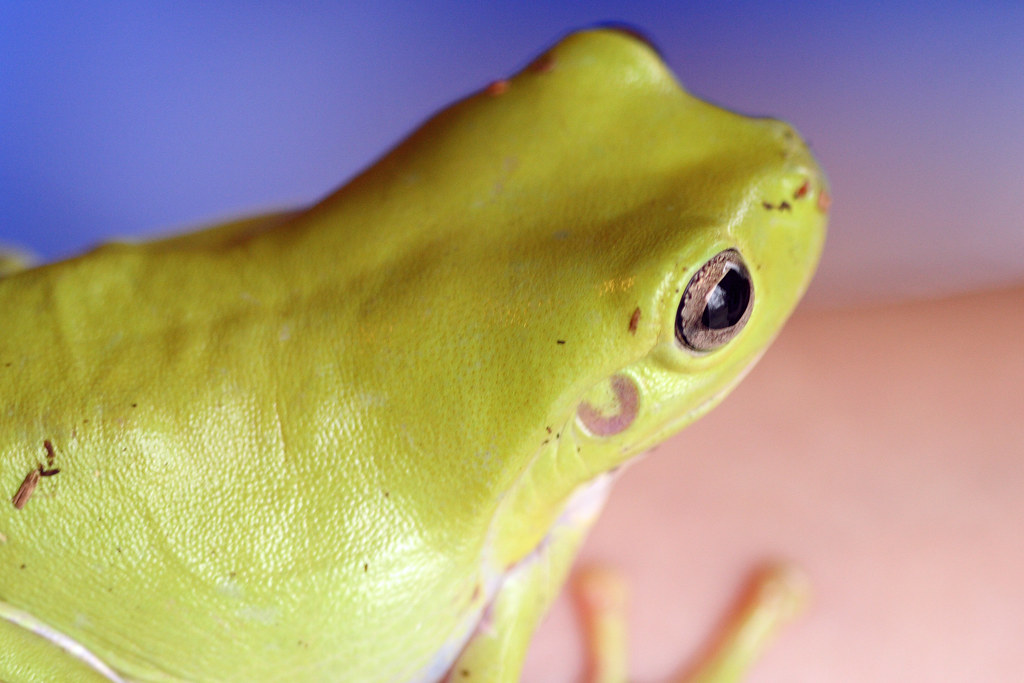
In honor of the event I borrowed a Canon 100mm macro lens from my friend (What? Doesn't everyone have a friend that will let them borrow a $600 lens?) This lens has a great reputation and my experience with it was no exception. This is a true 1:1 macro lens and allows you to easily capture the most intricate details of your subject. It is also a fast f/2.8 lens, so it is awesome even in low light. For this shoot I had my daughter hold her frog near our sliding glass window. The shoot was kind of tricky, because even though this frog is not overly active, he still kept turning out of the light. In order to compensate I had to keep repositioning myself around the frog.


One of the keys to photographing animals is to keep their eyes in focus. Other body parts can be out of focus and people will not really notice, but if the eyes are out of focus the photograph is ruined. In order to take full advantage of the natural light I had to use a very wide aperture (f/2.8-f/4.0). Since this makes the depth of field very shallow and since I was constantly moving around the frog it was surprisingly difficult to get shots that were focused the way I wanted. Even so, I was happy with several of the shots .


A word of warning...never borrow a nice lens like this from a friend as you will not want to return it. He said I could borrow it anytime, however, so that made it a LITTLE easier to return. The reality is that this is a fairly specialized lens, so I honestly would not use it that much. But, when you need close up shots with lots of detail this lens is very hard to beat.